Food waste is often a visibility problem.
Restaurants don’t usually waste food because they want to. They waste food because systems don’t talk to each other. Inventory changes in the back of house, but the menu board still promotes the item. An ingredient runs low, but the screen keeps selling it. A product underperforms, yet it remains featured.
When visibility is delayed, waste increases.
Inventory-based digital menu boards close that gap by aligning what customers see with what is actually available in real time.
Restaurants frequently waste food due to mismatches between demand and visibility. Digital menus that reflect real-time stock levels allow operators to adjust offerings instantly, reducing spoilage and unnecessary preparation.
How Static Menus Contribute to Waste
Static menus, even digital ones, are typically disconnected from inventory systems. That disconnect creates predictable problems:
Promoting unavailable items
If an item sells out but remains on the menu, customers order it anyway. Staff then substitute, discount, or discard partial prep.
Over-ordering due to poor visibility
When sell-through data and menu visibility are not aligned, forecasting becomes less precise. Operators may prep too much of a slow-moving item.
Manual removal delays
Someone has to remember to take an item off the menu. During peak hours, that task falls down the priority list.
Each of these issues increases spoilage, waste, and operational friction.
Without real-time updates, restaurants may continue promoting items that cannot be fulfilled, leading to customer dissatisfaction and unnecessary food preparation.
What Is an Inventory-Aware Menu?
An inventory-aware digital menu connects directly to your POS and inventory data.
Instead of operating as a static display, the menu reflects live operational conditions. If an item is marked unavailable, the screen updates. If an ingredient threshold is reached, logic can adjust what is shown.
In simple terms:
The menu responds to what is happening in the kitchen.
This is where inventory-based digital menu boards move from marketing tool to operational system.
Integrated systems can automatically remove sold-out items and shift demand toward available products, improving both accuracy and inventory utilization.
How Dynamic Menus Reduce Waste
Inventory-aware systems reduce waste through automation and logic.
Auto-removal of sold-out items
When inventory hits zero, the item disappears automatically. No manual edits. No overselling.
Local ingredient adaptation
If one location is short on a specific ingredient, it can adjust its menu without impacting other stores.
Time-based menu logic
Products can be promoted when inventory is high and de-emphasized as supply tightens.
The result is not just fewer errors. It is smarter merchandising aligned with real inventory conditions.
Some restaurant chains use inventory-aware recommendations to promote items with surplus stock, reducing waste while increasing order size.
Operational Impact
The impact extends beyond food cost.
Lower waste
Fewer sold-but-unavailable items means less prep loss and fewer substitutions.
Cleaner execution
Staff are not explaining discrepancies or manually updating screens during busy shifts.
More agile sourcing
Operators can adapt menus based on supply chain realities, not static templates.
Over time, small improvements in visibility compound into meaningful reductions in waste.
Real-time inventory management helps maintain optimal stock levels, preventing both overproduction and stockouts that contribute to spoilage.
Technology Requirements
Implementing inventory-aware menus does not require complex infrastructure. It requires alignment.
At a minimum, you need:
- POS integration
- Inventory visibility within your system of record
- A digital signage platform capable of real-time updates
This is where real-time digital menu boards become critical. Without real-time synchronization, automation breaks down.
The goal is simple: one source of truth reflected everywhere the customer looks.
Reducing food waste is not just about sustainability messaging. It is about operational clarity.
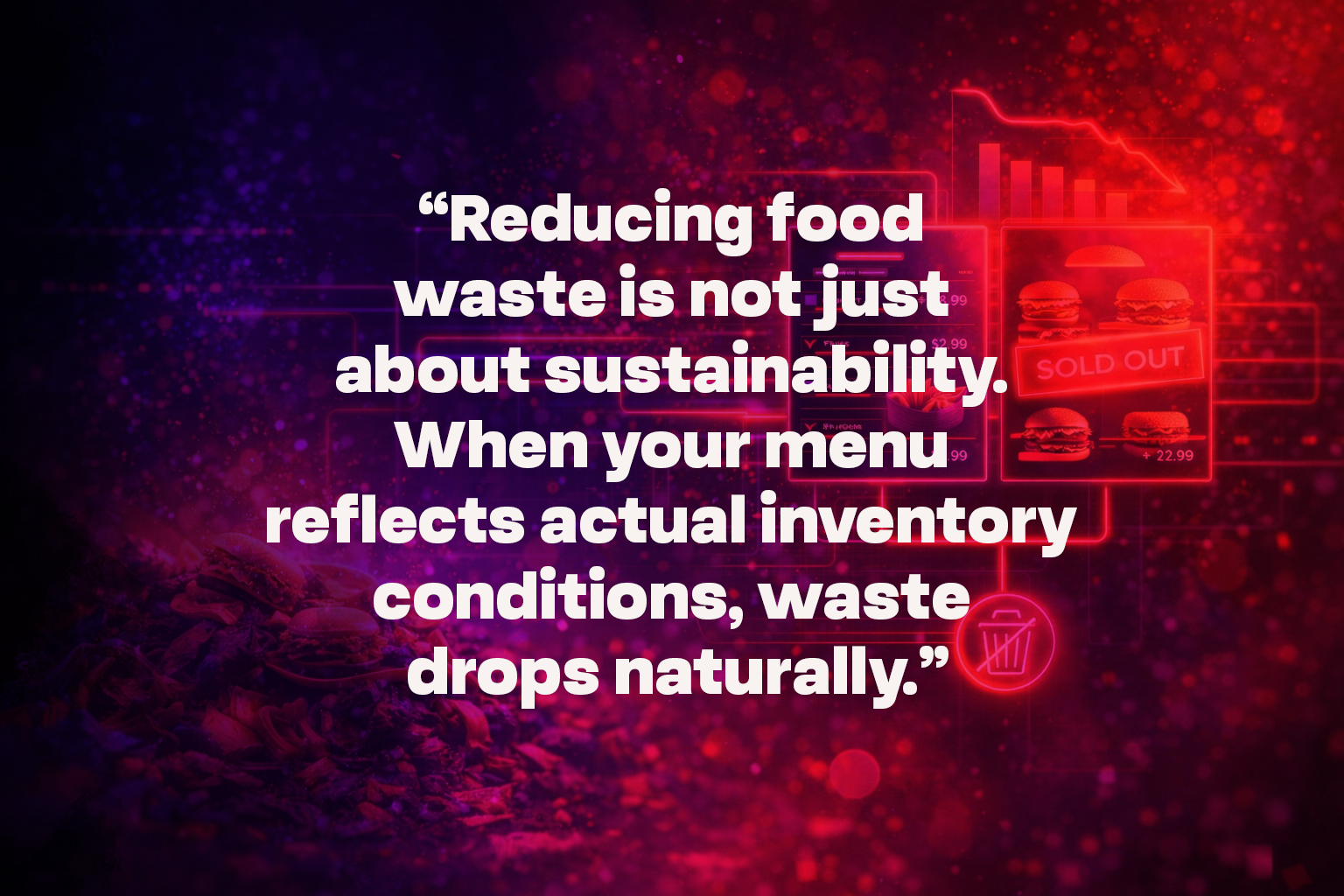
When your menu reflects actual inventory conditions, waste drops naturally.