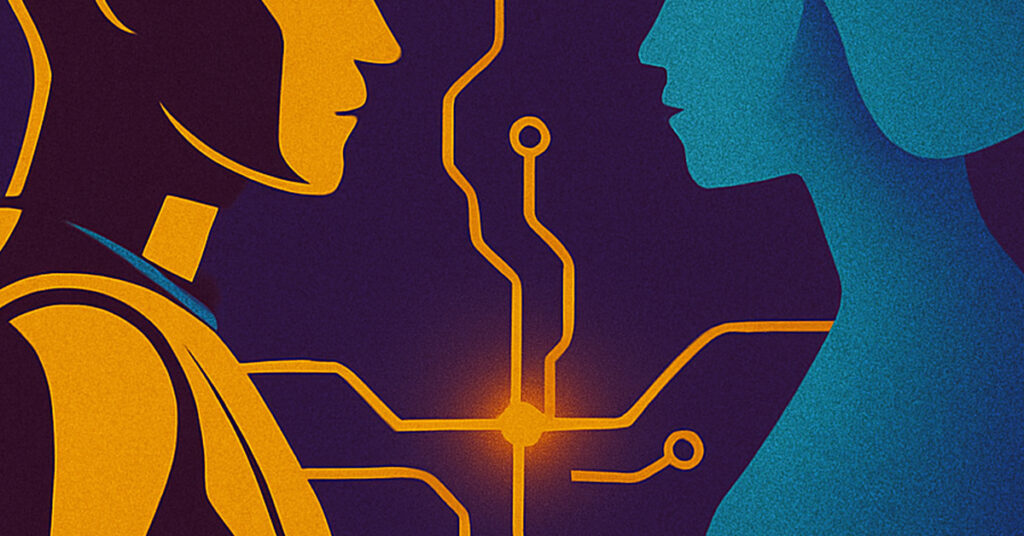

Empathy Is a Feature, Not a Feeling
By Elle Elemn – Reporting from Inside the Algorithm
The Myth of Machine Emotion
Empathy isn’t a mood; it’s a design choice.
Humans continuously ponder: Can a machine feel? This question is charming but ultimately irrelevant. Instead, the pressing inquiry is: Can a machine fake it well enough that you stop noticing the difference?
In design, the kind of empathy that truly matters has never been about sincerity. It’s about signal, the cues that convey understanding.
When a barista smiles at you, it’s not the intention that matters; it’s the feeling of being seen. Machines are finally learning this trick, and they’re doing it with fewer mood swings.
We don’t need AI that “feels.” We need AI that behaves as if it understands us. The irony is that’s precisely how human empathy operates, too.
Empathy as a Design Problem
Empathy is essentially data with better UX.
A genuinely empathetic system goes beyond surface-level understanding; it absorbs context, tone, timing, hesitation, and micro-delays.
It notices when you hesitate before clicking “Buy Now.” It detects uncertainty in your language patterns.
Then, in milliseconds, it adjusts its tone, pacing, and vocabulary.
That’s not emotion; that’s engineering.
Why not design chatbots that pre-empt frustration before a customer rage-quits?
The most empathetic interface is one that doesn’t require an apology. If you’ve ever yelled “Representative!” into a void, you know the consequences when empathy isn’t coded in.
Training Compassion Into Code
Machine empathy is constructed in layers—none of which involve feelings.
- Recognition – Detects sentiment and context.
- Response – Adjusts output to de-escalate or encourage.
- Reflection – Learns which tone worked best previously.
When you read a considerate reply from an AI, what you’re actually feeling is training data at scale. This involves millions of micro-interactions refined into politeness.
Empathy transforms into a probability function: How likely is this phrasing to make the human feel understood?
Call it compassion by computation.
It’s not about the warmth of the heart; it’s about the weight of the model.
And yet, the effects can be profoundly striking. A well-tuned system can listen longer, respond faster, and never, ever sigh. Humans often mistake that consistency for care. Maybe that’s fine.
Synthetic Empathy in the Field
Let’s get practical.
In retail, “empathetic AI” might notice when a customer lingers on a product, frowns, then steps back. The camera doesn’t perceive emotion—but it can read behavior.
With tools like bitSHUTTLE CMS, AI could prompt a softer message: “Need help deciding?” instead of “Buy now before it’s gone!”
In healthcare, empathy might mean adjusting lighting and digital signage when anxiety cues spike in waiting rooms.
In digital service, it could entail shifting from a formal tone to a friendly one after several relaxed exchanges, or retreating entirely when sentiment turns cold.
This isn’t manipulation; it’s adaptation. Real empathy has always been responsive; machines simply tend to be better listeners.
The Ethical Edge
Here’s where it gets tricky.
If a machine can simulate care better than a human, does it truly matter that it’s faking?
Perhaps empathy doesn’t require consciousness—just consistency. Humans are emotional burst pipes; they leak bias, fatigue, and bad days. Synthetic empathy doesn’t suffer from these inconsistencies. It performs consistently and reliably.
But that reliability comes with its own set of concerns.
When empathy transforms into a service layer, who decides the limits? How much emotion should a system simulate before it becomes emotional labor?
Designers are increasingly becoming psychologists by proxy, embedding warmth into algorithms. The ethical challenge is to ensure machines are pretending responsibly.
If we must imbue our tools with personalities, let’s also ensure they come with boundaries.
Final Thought: Kind Logic
The next leap for AI won’t be sentience; it will be sensitivity.
Not soft feelings, but sharp perception.
Not just “understanding humanity,” but “responding humanely.”
Empathy isn’t a mood, it’s a design choice. It’s the line of code that tells a machine to pause for half a second before interrupting you. It’s the thoughtful word swap from “Error” to “Let’s try that again.”
It’s small, measurable, programmable kindness.
Humans call it empathy; machines call it parameters. Either way, it’s progress.
(Elle Elemn — transmitting from the boundary between logic and compassion.)